CheckNumber.AI
· 6 min read
What is a Netflix Email Checker? The Business Case for Account Validation
Learn why businesses use Netflix email validation for fraud prevention and risk control, and how to ensure GDPR compliance.

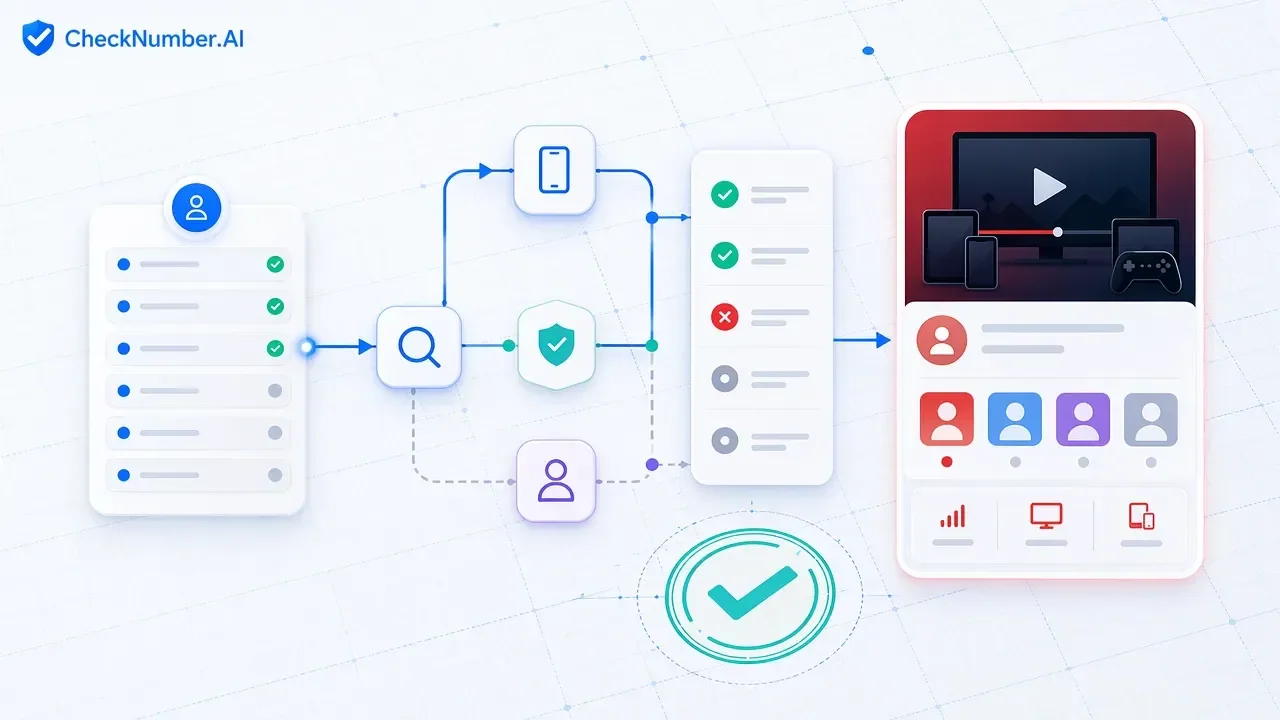
A Netflix Email Checker is a business-facing verification tool used to evaluate whether an email address is valid, active, and plausibly associated with a Netflix account. In practice, companies use Netflix email validation as a supporting signal in fraud prevention, risk review, identity correlation, and data-quality workflows rather than as a standalone proof of identity. For enterprise teams, it fits naturally into a broader account-verification and account-intelligence stack.
→ Start verifying — get 1,000 free checks →
Why businesses look at Netflix email validation differently
Most public search results around Netflix and email verification are consumer-oriented. They focus on login support, email confirmation, or account recovery. That is not the use case that matters here.
For a B2B operator, the real question is different: can account-related email validation improve the quality of a workflow that depends on trustworthy contact data?
That is where a Netflix Email Checker becomes relevant. It helps teams assess whether an email address looks technically valid and whether it can be treated as a stronger signal in a broader account intelligence process. In other words, the tool is valuable not because it says everything about a user, but because it helps reduce uncertainty before a business takes the next step.
What a Netflix Email Checker actually does
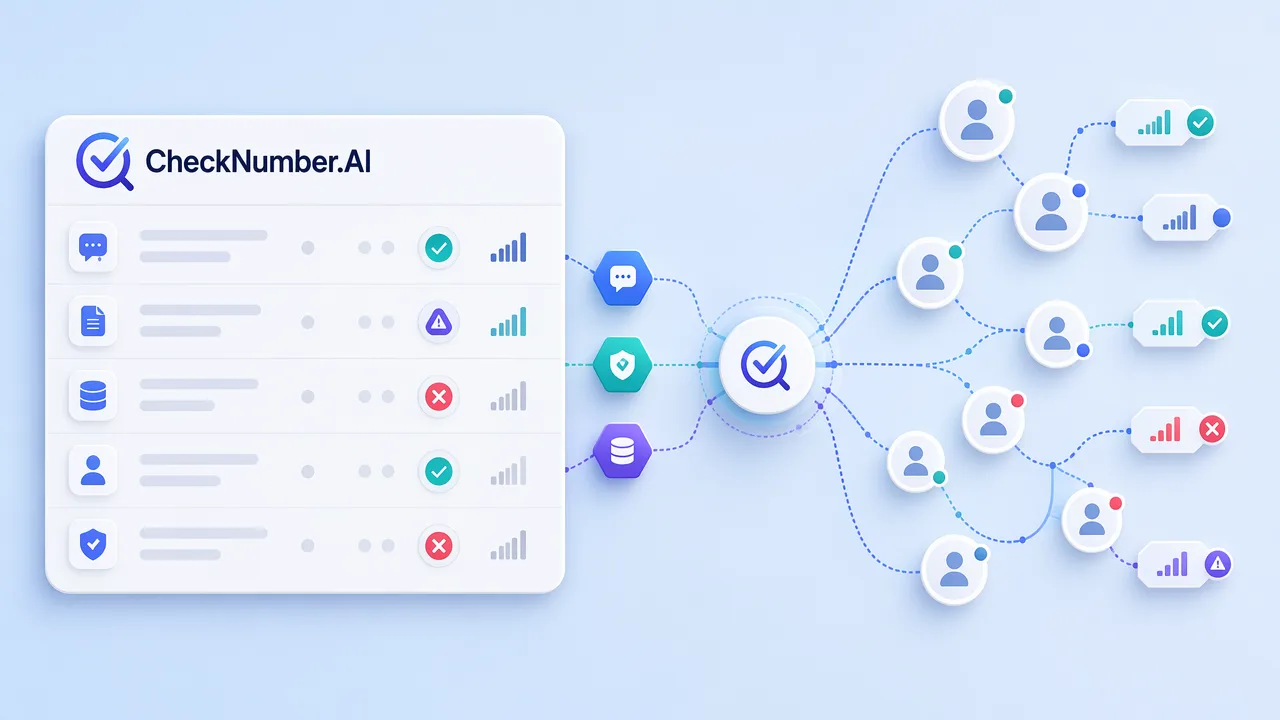
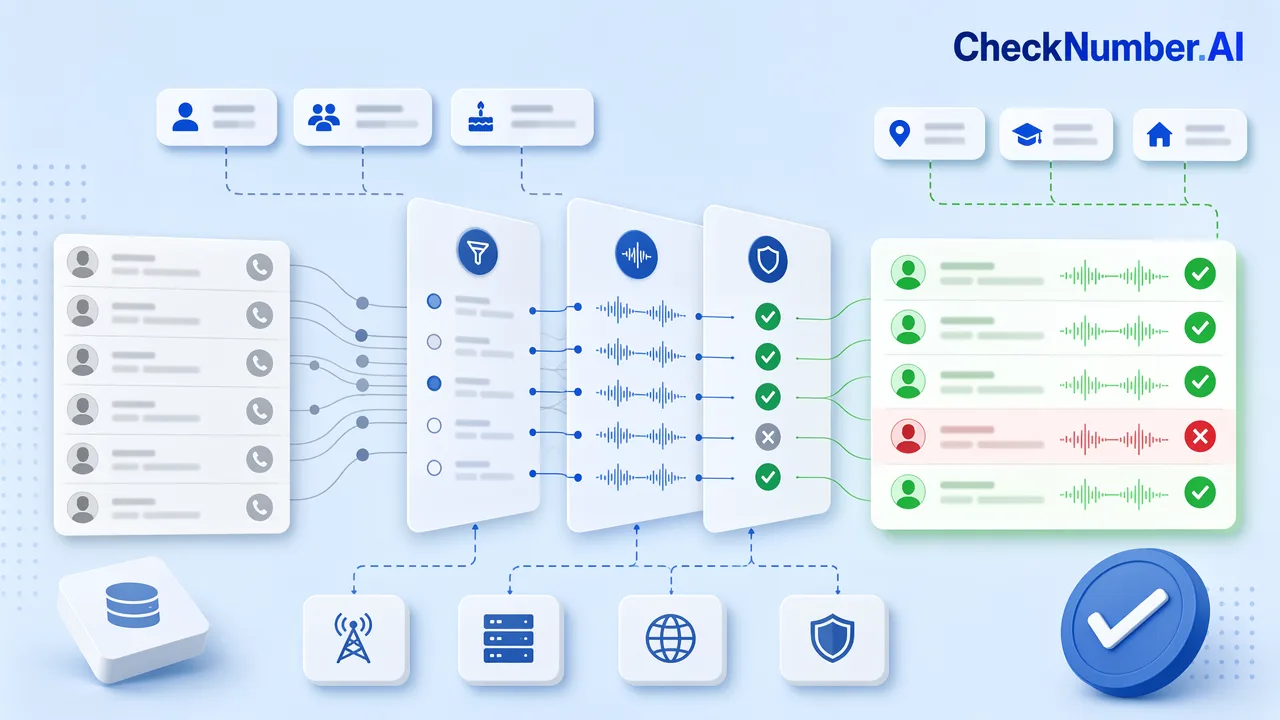
At a basic level, email verification starts with established validation checks. These commonly include syntax testing, domain existence checks, and mail server-level verification. Many enterprise verification providers also assign a quality score that helps teams distinguish between clearly usable addresses, questionable entries, and obviously bad records.
In a Netflix-specific workflow, that same logic is applied more narrowly. The goal is not to retrieve private Netflix account data or bypass platform controls. The goal is to treat Netflix-associated email validation as an account intelligence input that may support:
- fraud screening;
- identity correlation;
- onboarding review;
- internal trust scoring;
- database hygiene.
That distinction matters. A Netflix Email Checker should be viewed as a validation layer inside a larger verification platform, not as a shortcut to private information.
Why email quality matters more than many teams realize
Poor email quality creates downstream problems quickly. Some of those problems are obvious, such as bounced communication or duplicated records. Others are more subtle: incorrect segmentation, weaker analytics, and avoidable manual review.
Industry research consistently shows that email datasets degrade over time, and that a meaningful share of errors happens right at the point of entry. Typos, domain mistakes, abandoned inboxes, and intentionally fake submissions all contribute to the problem. Once that bad data enters core systems, it tends to spread into sales operations, lifecycle messaging, support records, and reporting.
That is why the value of validation is not limited to “cleaning a list.” It affects the reliability of multiple business processes that depend on accurate contact intelligence.
Where Netflix email validation helps in practice
The strongest use cases tend to appear in environments where teams need more confidence in account-related data before proceeding.
Fraud and abuse prevention
Risk teams often need lightweight ways to separate plausible users from obviously low-trust submissions. If an address appears invalid, disposable, malformed, or inconsistent with the expected account context, it can trigger additional review before the business commits resources.
Identity correlation
In some workflows, businesses need to understand whether a submitted identity has signs of continuity across services. A validated Netflix-associated email can serve as one supporting data point in that picture. It should not be treated as conclusive proof, but it may contribute to a broader confidence model.
Database hygiene
Growth and operations teams benefit from better source data. Validating account-related emails earlier reduces the number of low-quality records entering CRM, analytics, or downstream automation.
Review prioritization
Not every record deserves the same amount of manual attention. A validation layer can help route the most obviously questionable cases into enhanced verification while letting cleaner submissions move through a lower-friction path.
The business cost of getting this wrong
The cost of poor data quality is rarely confined to a single team. Inaccurate contact data can damage deliverability, distort reporting, waste analyst time, and increase support overhead. More broadly, it reduces trust in the data environment itself.
That is one reason email validation remains relevant even for sophisticated organizations. A business may already have strong dashboards, automation rules, and risk models, but if the underlying contact data is unreliable, those systems inherit the same weakness.
The compounding effect is important here. A single unverified email may seem unremarkable. A pattern of low-quality email records across onboarding, support, account recovery, and marketing systems is much more expensive.
Compliance, consent, and responsible use
Any workflow involving third-party account-related signals has to be handled carefully. Email validation is not exempt from privacy law or internal governance requirements simply because it looks technical.
Businesses using a Netflix Email Checker should keep a few principles in view:
- use the minimum data necessary for the workflow;
- be clear about the legitimate purpose of the check;
- avoid using validation as a hidden profiling shortcut;
- ensure consent and disclosure obligations are handled appropriately where required;
- separate technical validation from broader identity decisions.
This is especially important under frameworks such as GDPR and CCPA, where legality, transparency, and proportionality all matter. A responsible implementation focuses on workflow integrity and risk reduction, not on collecting more information than the business actually needs.
What a strong implementation looks like
The most effective Netflix email validation programs are usually boring in the best sense: they are operationally disciplined.
That typically means:
- validating email inputs as early as possible;
- tagging results clearly in internal systems;
- using the output as one signal among many;
- monitoring false positives and workflow impact over time;
- documenting how the validation step fits into privacy and compliance controls.
When used this way, the checker becomes part of a cleaner decision pipeline rather than a gimmick or a blunt filter.
Conclusion
A Netflix Email Checker is most useful when treated as a precision tool for improving data quality and reducing avoidable uncertainty. It helps businesses work with cleaner records, prioritize review more intelligently, and support fraud or risk workflows with better inputs across a broader enterprise verification process.
Its real value is not in making absolute claims about a user. It is in helping teams make better operational decisions with less noise, provided the tool is used with clear governance, careful framing, and respect for privacy boundaries.
FAQ
Is Netflix email validation the same as identity verification?
No. It is better understood as a supporting signal that may contribute to identity or risk workflows, not as a standalone proof of identity.
Can a Netflix Email Checker access private account data?
A compliant tool should not rely on unauthorized access to private account information. Its role is to support validation and workflow quality, not to bypass platform protections.
Why is this useful for operations teams?
Because better contact data reduces downstream friction in CRM, analytics, fraud screening, and manual review processes.
What should businesses be careful about?
They should use the minimum data necessary, avoid overclaiming what the signal means, and align the workflow with privacy and consent requirements.