CheckNumber.AI
· 4 min read
MAX Number Verification: Business Value and Marketing Campaign Optimization
Learn how MAX Checker helps businesses optimize outreach, save budget, and maintain compliance before bulk campaigns.

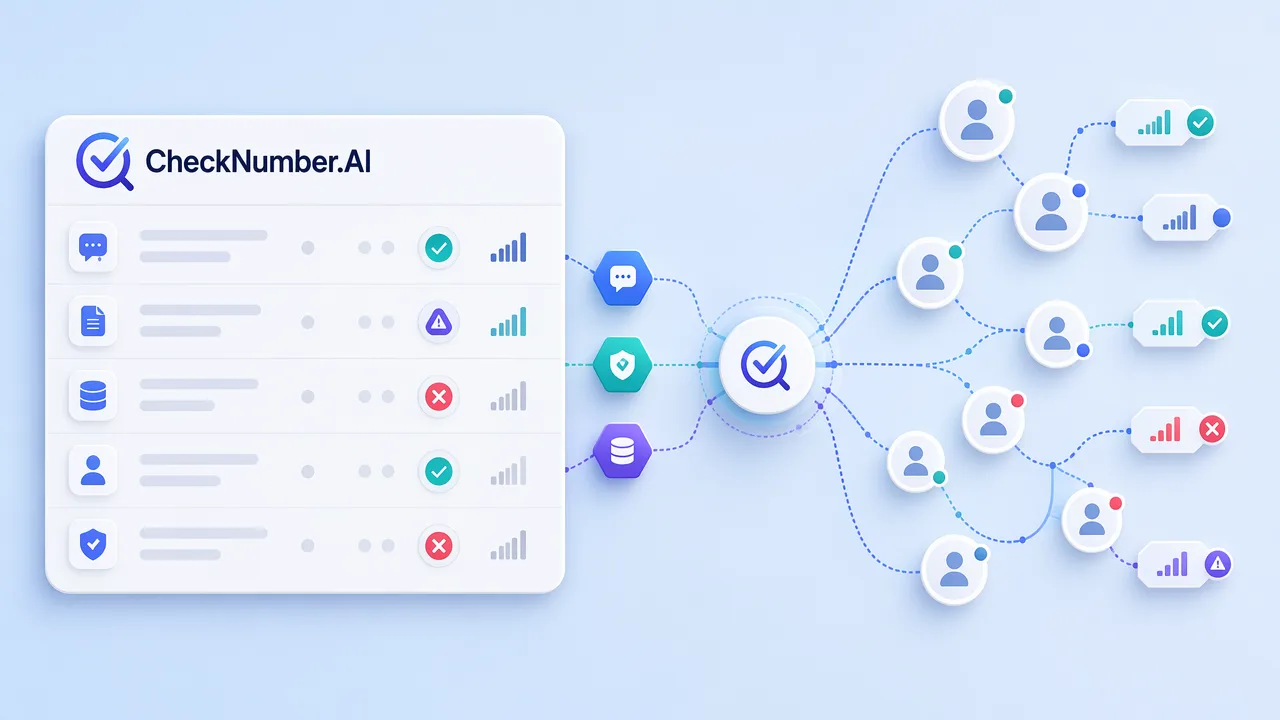
MAX number verification, or MAX Checker, helps you determine in advance whether a phone number is linked to an active account in the messenger. For businesses, this is not just a technical pre-send check — it is part of a broader verification infrastructure: a way to cut unnecessary spend, improve account intelligence quality, and reduce the risk of ineffective communications.
→ Verify MAX numbers at scale — get 1,000 free checks →
Why this matters now
MAX has quickly become a notable digital communication channel in Russia. According to open sources, the platform has already attracted a large audience and continues to grow, while registration requires a valid mobile number. Against that backdrop, companies are starting to treat MAX as a working channel for service notifications, marketing touchpoints, and sales.
But as the channel grows, an old problem returns: database quality. If a team launches communications without prior verification, part of the budget goes to numbers that are not registered in the system, are inactive, or simply do not fit the current scenario.
That is why MAX number verification is the first logical step before any mass outreach activity.
What MAX Checker means in an enterprise scenario
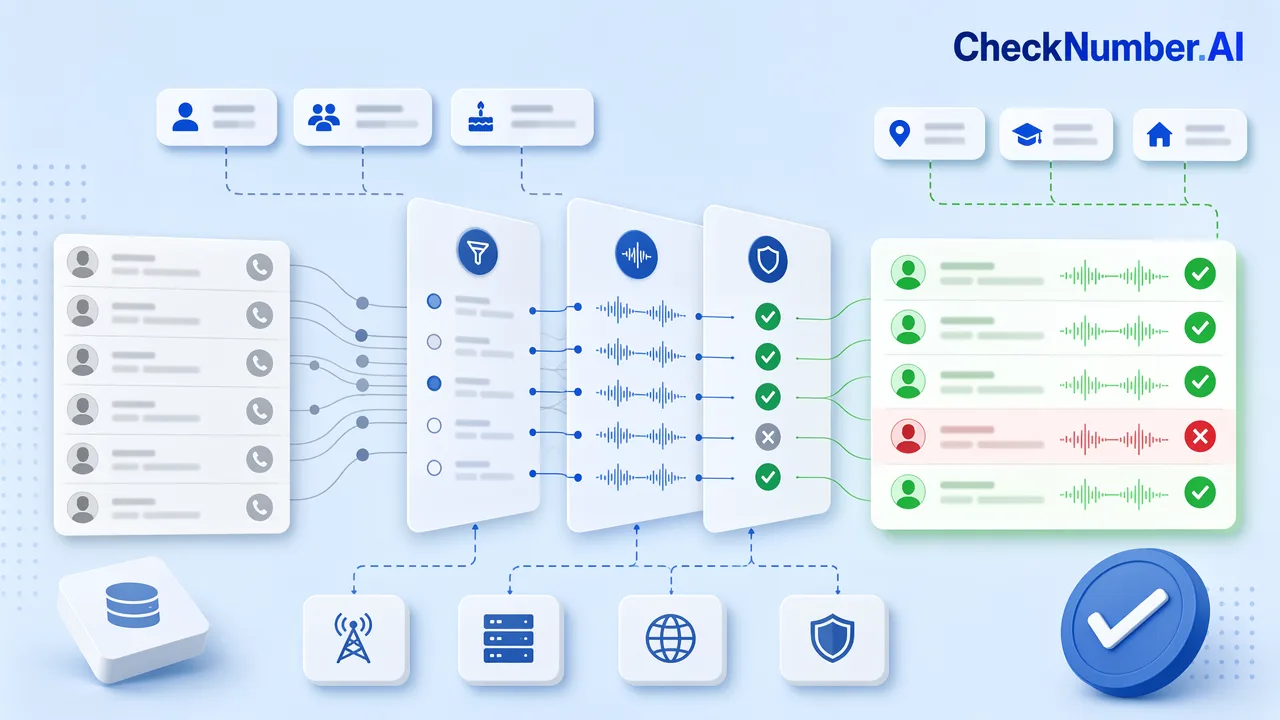
MAX Checker is a tool or process that helps you bulk-check which numbers are linked to MAX accounts. In an enterprise environment, this verification works as an account verification layer: it helps separate potentially relevant contacts from those a campaign is unlikely to reach.
In practice, this is especially important when working with large exports from CRM, CDP, or internal databases. Before verification, numbers are usually normalized to a single format — for example E.164 or the local standard supported by the service. The database is then validated, and the team receives a cleaner list for further segmentation and communication.
It is also important to understand what MAX Checker does not do. It does not confirm purchase intent, replace communication consent, or substitute full identification. Its role is narrower and more useful: it provides a technical verification signal about whether a contact should enter the next stage at all.
How number verification affects campaign results
The main value of database verification shows up in campaign economics. When messages go only to relevant contacts, the company reduces empty actions and gets a clearer picture of effectiveness.
The benefit comes from several factors:
- Lower wasted spend. Budget is not spent on numbers outside the MAX ecosystem.
- Cleaner analytics. Metrics such as response, opens, and conversion become closer to reality because the database is better prepared from the start.
- Stronger operational discipline. Marketing, sales, and CRM teams work from the same cleaned data instead of different versions of the contact base.
For teams running regular communication scenarios, this is especially important. The more automation in the process, the more expensive errors in source data become.
Why this matters for marketing and sales
Number verification is useful beyond the sends themselves. It affects the entire audience funnel.
In marketing, it helps reduce off-target sends and sharpen segments. In sales, it avoids spending time on contacts that clearly will not reach the right channel. In CRM processes, it keeps the database more current and prevents reports from being distorted by technically irrelevant numbers.
There is also an effect on cross-team work. When marketing and sales rely on higher-quality data, it is easier to synchronize scenarios, priorities, and goals. B2B research has long shown that alignment between functions directly affects growth pace and funnel quality.
Compliance and personal data
A phone number is personal data, so the idea of database verification should not be treated as carte blanche for any follow-up action. Technical verification and the right to communicate are different things.
Even if a number is linked to an active MAX account, companies still need to:
- have a lawful basis for processing data;
- use only contacts obtained legally;
- follow data minimization principles;
- work within transparent opt-in logic where required.
From a practical standpoint, pre-verification even supports these rules. It reduces the temptation to “blast the whole database” and pushes the business toward more careful, selective contact handling.
Where MAX Checker delivers the most value
The clearest effect appears in several scenarios:
- before launching mass marketing campaigns;
- when preparing sales or service outreach campaigns;
- when cleaning old databases and reactivating contacts;
- when synchronizing CRM with new communication channels.
In all of these cases, the business gets the same basic result: less noise in the data and more predictability in next steps.
Conclusion
MAX number verification is not a secondary technical operation — it is a basic element of quality database preparation and more mature verification logic. It helps companies avoid wasting budget, work more carefully with analytics, and build communications on a more reliable foundation.
For businesses that want to use MAX as a full marketing and sales channel, this step quickly stops being optional and becomes the norm. The earlier verification is built into campaign preparation, the higher the chance that every subsequent action will be more precise, cheaper, and more useful for the team.