CheckNumber.AI
· 5 min read
What Is MAX Full Info Checker: Using Extended Data for Customer Profiling and Lead Qualification
Learn how MAX Full Info Checker enriches CRM with gender, age, last seen, and avatar signals for smarter lead qualification.

MAX Full Info Checker helps you gather additional signals about a MAX account profile — such as gender, age, last seen, and avatar. For businesses, this data is most useful not as a standalone source of truth, but as an extra layer of account intelligence for CRM, profiling, and initial lead qualification.
→ Start verifying MAX accounts — get 1,000 free checks →
Why businesses need additional signals
In many CRM workflows, the problem is not a lack of contacts but a lack of context. A company may have a phone number, sometimes a name, sometimes touch history — but that is often not enough to quickly decide how to structure the first communication or which contacts deserve closer attention.
This is where auxiliary profile signals add value. They do not replace behavioral analytics, purchase history, or first-party data, but they help make the customer profile slightly more accurate and practical for day-to-day work.
MAX Full Info Checker fits this scenario: it expands the original dataset and makes the CRM more useful for marketing, sales, and customer operations teams.
What MAX Full Info Checker provides
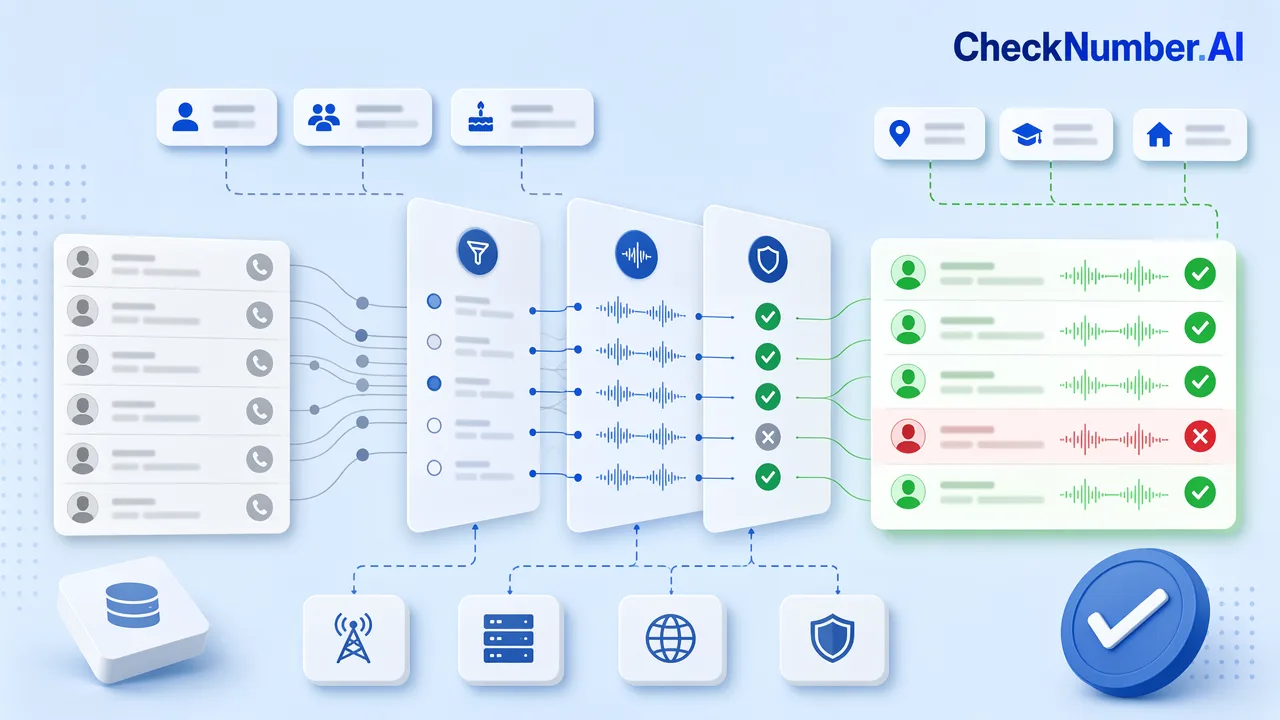
Depending on data availability, the service may return:
- gender;
- age;
- last activity time;
- profile avatar.
Each element on its own should not be treated as a final decision criterion. Combined with other data, they help describe a contact profile more accurately and clarify how to work with that contact next.
For example, last seen can indicate how active a contact is in the channel. Age group can support more careful segmentation. An avatar can sometimes help distinguish a more “live” profile from an obviously technical or minimally filled one.
The key point is that these are auxiliary signals, not fully deterministic conclusions. For enterprise teams, the value is not in “magically knowing” everything about a user, but in a more structured enrichment layer on top of the basic record.
How this works in customer profiling
Customer profiling is not about a pretty CRM card — it is about better decisions. The better a company understands contact context, the easier it is to:
- choose a relevant tone of voice;
- prioritize leads;
- adapt first touchpoints;
- avoid overloading very different audience segments with identical scenarios.
Customer analytics and profiling research have long shown that companies value a fuller view of the user because it helps personalize the experience more precisely. Mature teams, however, do not build strategy on a single parameter. They assemble the picture from multiple sources: first-party data, interaction history, behavioral signals, and, when needed, careful external enrichment.
In that logic, MAX Full Info Checker is useful as a supplement, not a replacement.
Use in lead qualification
For sales and growth teams, lead qualification is especially relevant. The goal is not to “guess” the customer from a few traits, but to understand more quickly who to prioritize and how to structure the first contact.
Additional profile signals help:
- sort the database into higher- and lower-priority contacts faster;
- add context to initial lead assessment;
- make communication less templated;
- reduce the share of completely irrelevant outreach.
For example, a recent activity signal can help choose contact timing. Basic demographic data supports rough segmentation. An avatar adds general context for manual review by a manager. But none of these traits should be used in isolation — and certainly not as an automatic final decision about a customer.
Why it is important not to overvalue this data
The most common mistake with services like this is assigning too much weight to additional fields. That creates risks of false conclusions, segmentation bias, and overly aggressive profiling.
To avoid this, follow a simple rule: data from MAX Full Info Checker should support decision-making, not replace it.
In practice, that means:
- do not rely only on age or gender for significant decisions;
- do not use a single profile signal as sufficient proof of intent or customer value;
- do not separate this data from overall CRM logic, touch history, and agreed internal rules.
The more carefully a company interprets these signals, the more useful they become in practice.
Compliance, consent, and data protection
Any work with additional data should follow clear rules for handling personal information. This is especially important if a company uses such signals in marketing, scoring, or customer intelligence.
A safe approach usually includes:
- using only data that is truly needed;
- a clear rationale for why specific fields are used in the process;
- transparent storage and access policies;
- compliance with local and international privacy requirements.
For European and international businesses, this is especially sensitive. Even when data is used as auxiliary input, companies should avoid opaque profiling and excessive data collection.
Conclusion
MAX Full Info Checker is useful when a business needs a bit more context than a basic contact record provides. It helps enrich CRM, segment the database more carefully, and orient lead prioritization faster — while remaining part of a broader verification and enrichment infrastructure.
Its strength is not in “knowing everything” about a customer, but in adding a few practical signals to an existing data system. Used responsibly, that makes communication more precise and team work more meaningful and manageable.