CheckNumber.AI
· 4 min read
Optimizing Affiliate Lead Quality Review: A Guide to Operational Signal Integration
Learn how to integrate exchange-related contact signals into your CRM workflow to improve data hygiene and prioritize manual review efforts.
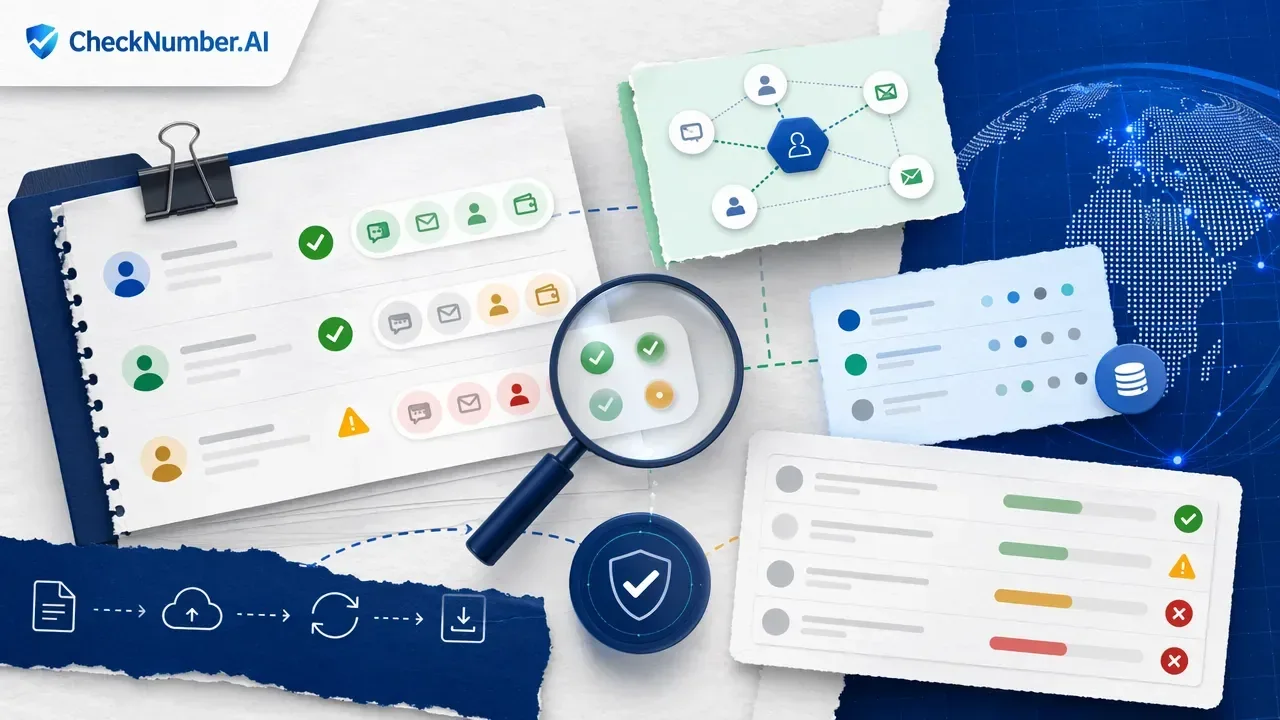
Affiliate lead quality review can be made more consistent by integrating exchange-related contact signals into your CRM workflow. By using scoped validation to assess contact data, operations teams can prioritize manual review efforts, improve data hygiene, and separate unsupported contacts without treating signals as proof of fraud, identity, or account ownership.
→ Start verifying — get 1,000 free checks →
The Challenge of Modern Affiliate Lead Management
Traditional lead generation methods often rely on static forms that lack the depth required for modern risk operations. As affiliate programs scale, the volume of incoming data can overwhelm manual review teams. Effective lead quality review requires moving beyond basic form submissions to structured, data-supported validation processes that help teams decide which records need manual review.
Integrating Exchange-Related Contact Signals
To manage lead quality effectively, teams can incorporate exchange-related contact signals as supporting review inputs. These signals provide scoped context about whether contact information returns account-related signals on supported platforms. By applying scoped validation, managers can categorize leads based on these signals, keeping the review process focused on records that require human judgment. This approach helps maintain a cleaner database by identifying unsupported contacts early in the lifecycle. For teams managing digital asset-related programs, a crypto exchange checker can further refine these operational inputs.
Prioritizing Manual Review Efforts
Data hygiene is essential for effective lead management. By automating the identification of unsupported contacts and duplicate records, teams can reduce the volume of low-context records sent to manual review. Automated checks serve as a filter, allowing risk operations teams to prioritize records that show specific account-related signals or ambiguous results. This tiered approach helps allocate review resources more efficiently.
Operationalizing Data with CheckNumber.AI
CheckNumber.AI provides a multi-platform API designed for bulk contact validation across 45+ supported checks. By integrating this API into existing CRM workflows, operations teams can perform silent checks on contact data. This allows unsupported contacts or ambiguous records to be routed consistently, helping teams maintain cleaner lead data without relying only on manual inspection at the point of entry.
Building a Lead Review Scoring Model
Affiliate teams get better results when every lead moves through the same review model. A practical model can start with four buckets: accept, enrich, review, and suppress. Leads with complete contact data and expected account-related signals can move forward faster. Leads with missing, malformed, duplicate, or conflicting data can be enriched or held for manual review. Records that clearly fall outside the campaign scope can be suppressed before they consume sales or compliance time.
The goal is not to label a lead as good or bad from one signal. The goal is to create a repeatable decision path that combines source quality, contact validity, campaign fit, and reviewer notes. This helps affiliate managers compare traffic partners more fairly and identify which sources consistently send incomplete or low-context records.
CRM Fields Worth Capturing
To make the workflow measurable, store a few structured fields next to each lead: source partner, campaign ID, normalized phone or email, check type, result status, duplicate status, reviewer outcome, and next action. These fields allow operations teams to report on lead quality by partner, landing page, traffic source, and region.
Over time, the same fields can support partner conversations. Instead of relying on anecdotal feedback, teams can show which batches required the most manual review, which sources had the highest unsupported-contact rate, and which segments produced records that were ready for follow-up.
FAQ
How do exchange-related contact signals assist in lead review?
These signals provide supporting review inputs that help operations teams identify unsupported contacts, allowing for more efficient manual review prioritization.
What is the benefit of scoped validation for affiliate managers?
Scoped validation allows managers to filter and assess lead data systematically, so manual review efforts can be directed toward contacts that require further investigation.
How does API-based validation improve CRM data hygiene?
API-based validation helps teams check contact data near the point of entry, reducing the accumulation of unsupported contacts and improving the overall quality of the lead database.